
Particle generators and dispersers are specialized systems designed for the controlled generation, dispersion, and delivery of particles and aerosols for research, development, calibration, filter testing, instrument testing, and laboratory experiments. These systems make it possible to create controlled particle populations at defined concentrations and flow conditions, enabling repeatable and reliable testing of particle measurement instruments, filtration systems, sensors, and air monitoring equipment.
In the Particle Generators and Dispersers category, you can find aerosol generators, powder dispersers, and particle generation systems suitable for a wide range of applications in aerosol science, air quality, environmental research, industry, occupational health, nanoparticle research, and filtration system development.
A particle generator is a system designed to create a controlled aerosol containing airborne particles. Depending on the technology and application, particles can be generated from liquids, powders, or other source materials and introduced into a test or measurement system.
The purpose of the generator is to provide a stable, controlled, and repeatable particle source so that different tests can be compared and the response of a specific system can be evaluated under defined aerosol conditions.
Particle generators are commonly used for testing:
An Aerosol Generator is used to create a controlled suspension of particles in air. The generated aerosol can then be introduced into a test chamber, filtration system, measurement instrument, or experimental setup.
These systems are used when a controlled particle concentration is required for calibration, performance testing, or scientific research.
The category includes systems such as the Aerosol Generator 3076 and Aerosol Generator 3079, designed for particle and aerosol research and testing applications.
An aerosol generator makes it possible to create controlled test conditions instead of relying on naturally occurring airborne particles, whose concentration and composition can change continuously.
This enables users to:
The ability to control aerosol generation conditions is especially important in experiments that require high accuracy and repeatability.
In addition to liquid aerosol generators, Particle Dispersers and Powder Dispersers are used for the controlled dispersion of powders and dry particles.
These systems convert powder into a dispersed airborne particle stream and deliver it into a measurement instrument or experimental setup.
A system such as the Small-Scale Powder Disperser 3433 is suitable for applications where small quantities of powder need to be dispersed for research and characterization purposes.
A particle generator typically creates an aerosol from a source material through a controlled process, while a particle disperser is mainly used to disperse existing particulate material, such as powder, into an airflow.
In practice, the choice depends on the type of material and the purpose of the experiment.
When working with a liquid or solution, an aerosol generator is usually the appropriate choice. When working with powders or dry particulate materials, a powder disperser may be more suitable.
One of the most important uses of particle generators is the calibration and performance testing of particle measurement instruments.
To verify whether a particle counter or aerosol instrument responds correctly, a controlled particle population can be introduced into the instrument and the resulting measurements can be evaluated.
This approach makes it possible to assess:
In research and calibration laboratories, a stable particle source is an important part of validating instrument performance.
In filter testing applications, a particle generator is used to create a test aerosol that is directed toward the filter.
Particle concentration can then be measured upstream and downstream of the filter to calculate filtration efficiency.
This method can be used to test:
A stable particle generator enables reliable comparisons between different filters and makes it possible to evaluate their performance under controlled conditions.
Particle generators and dispersers are also widely used in advanced nanoparticle and aerosol research.
Particles can be generated and then measured using systems such as CPC, SMPS, particle counters, or particle size distribution analyzers.
Combining a particle generation system with measurement instrumentation allows researchers to study:
These systems are used in many fields, including:
Choosing the right system depends primarily on the type of particles that need to be generated or dispersed and the objective of the experiment.
Important parameters include:
For example, a research application using only a very small amount of powder may require a small-scale powder disperser, while a filter testing system may require an aerosol generator capable of providing a stable particle source over an extended period.
In advanced applications, the particle generator is often only one component of a larger measurement setup.
A complete system may include a particle generator or disperser, mixing chamber, dilution system, flow control, particle counter, particle size distribution analyzer, and data acquisition software.
This type of configuration enables controlled experimental conditions and accurate measurement of how a particle population changes throughout the test process.
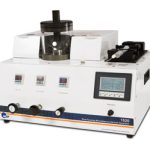
Meteo-Tech offers a range of professional solutions for particle generation, aerosol generation, and powder dispersion, designed for research, development, calibration, filter testing, and particle measurement system characterization.
These systems are suitable for laboratory, academic, and industrial applications and enable particles to be generated or dispersed under controlled conditions for accurate, repeatable, and reliable measurements.